

Mobile App Development Guide for Startups and Businesses in 2026
Mobile applications have transformed the way businesses interact with customers. From e-commerce and healthcare to education and logistics, mobile apps are now essential for improving customer engagement, increasing sales, and building strong digital brands.
In 2026, businesses are investing heavily in custom mobile applications to stay competitive and improve operational efficiency.
Why Businesses Need Mobile Apps
Customers now expect fast, convenient, and personalized mobile experiences. Businesses without mobile apps often struggle to maintain customer engagement.
Major Benefits of Mobile Apps
Better customer communication
Increased brand visibility
Higher customer retention
Faster online sales
Personalized user experiences
Improved operational efficiency
Types of Mobile Applications
1. Native Apps
Native apps are developed specifically for Android or iOS platforms.
Advantages
- Better performance
- Improved security
- Smooth user experience
2. Cross-Platform Apps
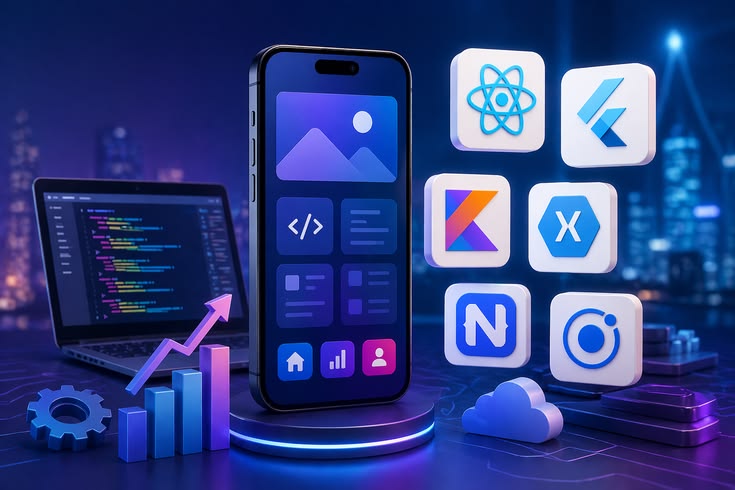
Cross-platform apps work on both Android and iOS using a single codebase.
Popular Frameworks
- Flutter
- React Native
Cross-platform development reduces development costs and launch time.
3. Progressive Web Apps (PWAs)
PWAs combine web and mobile app features for lightweight mobile experiences.
Mobile App Development Process
Step 1: Market Research
Businesses must understand customer needs, competitors, and industry trends before development begins.
Step 2: UI/UX Design
User-friendly interfaces improve engagement and retention.
Important UI/UX Features
- Simple navigation
- Attractive design
- Fast performance
- Easy accessibility
Step 3: App Development
Developers build frontend and backend systems based on project requirements.
Step 4: Testing
Testing ensures the application works properly across devices and platforms.
Types of Testing
- Performance testing
- Security testing
- Functional testing
- Compatibility testing
Step 5: Deployment
The app is launched on Google Play Store and Apple App Store.
Latest Mobile App Trends in 2026
AI-Powered Apps
AI is improving personalization, automation, and predictive analytics inside mobile apps.
IoT Integration
IoT apps connect smart devices for automation and remote monitoring.
Cloud-Based Applications
Cloud integration improves app scalability and performance.
Mobile App Security
Security is critical for protecting user data and transactions.
Important Security Features
- Secure login systems
- Data encryption
- API protection
- Secure payment gateways
Mobile App Development Cost Factors
Several factors affect app development costs.
Key Cost Factors
- App complexity
- Number of features
- Platform selection
- Development technology
- Third-party integrations
Businesses should focus on long-term scalability instead of only reducing initial costs.
Future of Mobile Applications
The future of mobile apps includes AI automation, AR/VR experiences, voice search, and wearable device integration.
Businesses adopting modern mobile technologies early will gain stronger market advantages.
Conclusion
Mobile app development is one of the most powerful investments for business growth in 2026. A high-quality mobile application improves customer engagement, increases sales, and strengthens brand visibility.
Companies should focus on user-friendly design, security, scalability, and performance to build successful mobile applications.