
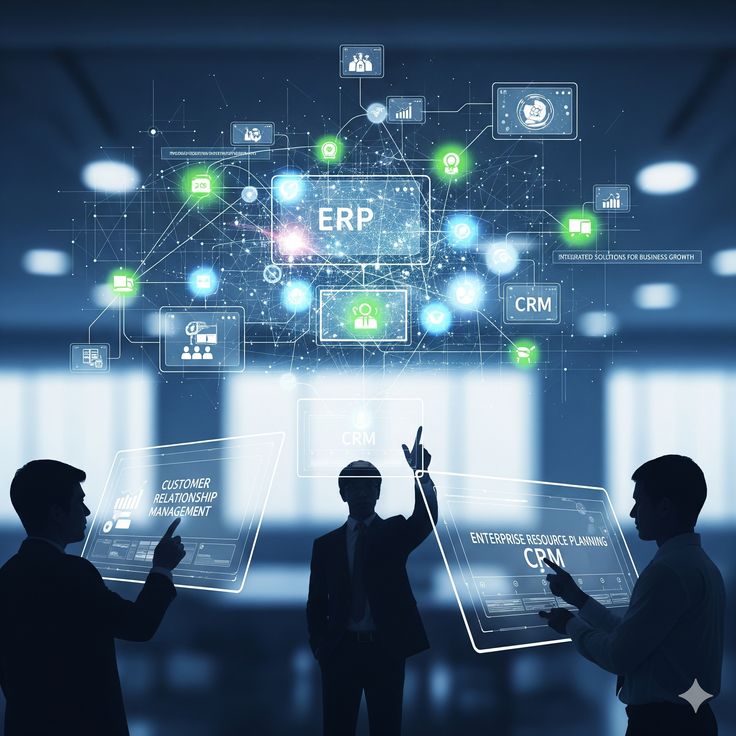
Transforming Business Operations for Sustainable Growth
In today’s competitive business environment, organizations need efficient systems to manage operations, improve productivity, and make informed decisions. Enterprise Resource Planning (ERP) solutions have emerged as powerful tools that integrate various business functions into a unified platform, enabling companies to streamline processes, reduce costs, and enhance overall performance.
Whether you’re a startup, small business, or large enterprise, implementing an ERP solution can help you achieve operational excellence and sustainable growth.
What Are ERP Solutions?
ERP (Enterprise Resource Planning) solutions are integrated software systems designed to manage and automate core business processes such as:

Human Resources (HR)
Inventory Management
Procurement and Supply Chain
Customer Relationship Management (CRM)
Manufacturing Operations
By centralizing business data and processes, ERP systems create a single source of truth for the entire organization, improving collaboration and decision-making. Modern ERP platforms integrate departments and provide real-time access to critical business information.
Why Businesses Need ERP Solutions
Many businesses struggle with disconnected software systems, manual processes, and inconsistent data. These challenges often lead to:
- Data duplication
- Communication gaps
- Delayed reporting
- Increased operational costs
- Poor customer experiences
ERP solutions eliminate these issues by connecting all departments through a centralized system, ensuring accurate and real-time information across the organization.
Key Benefits of ERP Solutions
1. Improved Operational Efficiency
ERP systems automate repetitive tasks such as invoicing, inventory updates, payroll processing, and financial reporting. Automation reduces manual errors and frees employees to focus on strategic initiatives.
2. Real-Time Data Visibility
Decision-makers gain access to real-time business insights through centralized dashboards and reporting tools. This enables faster responses to market changes and operational challenges.
3. Better Financial Management
ERP software helps organizations track expenses, manage budgets, monitor cash flow, and generate accurate financial reports, ensuring greater financial control and transparency.
4. Enhanced Customer Experience
Integrated CRM and sales modules allow businesses to manage customer interactions efficiently, resulting in faster service, personalized experiences, and improved customer satisfaction.
5. Inventory and Supply Chain Optimization
ERP solutions provide real-time inventory tracking, demand forecasting, and procurement management, helping businesses avoid stock shortages and reduce excess inventory.
6. Scalability for Business Growth
As organizations expand, ERP systems can scale to accommodate increased transactions, additional users, and new business processes without disrupting operations.
7. Compliance and Risk Management
ERP software includes audit trails, approval workflows, and compliance monitoring features that help businesses meet regulatory requirements and reduce operational risks.
Essential Features of Modern ERP Solutions
A robust ERP system should include:
Financial Management
- General Ledger
- Accounts Payable & Receivable
- Budgeting
- Financial Reporting
Human Resource Management
- Employee Records
- Payroll Processing
- Attendance Management
- Performance Tracking
Inventory Management
- Stock Monitoring
- Warehouse Management
- Purchase Orders
- Supplier Management
CRM Integration
- Lead Management
- Customer Support
- Sales Tracking
- Marketing Automation
Analytics and Reporting
- Custom Dashboards
- Business Intelligence
- KPI Tracking
- Predictive Analytics
Cloud Accessibility
- Remote Access
- Data Security
- Automatic Updates
- Mobile Compatibility
Cloud ERP vs Traditional ERP
Cloud ERP
Advantages:
- Lower upfront costs
- Faster deployment
- Remote accessibility
- Automatic software updates
- Better scalability
Traditional ERP
Advantages:
- Greater customization
- Full control over infrastructure
- Suitable for specific compliance requirements
Today, many organizations are adopting cloud-based ERP systems because of their flexibility, scalability, and lower maintenance requirements. Cloud ERP platforms are increasingly helping businesses become more data-driven and agile.
Industries That Benefit from ERP Solutions
ERP software can be customized for various industries, including:
Manufacturing
- Production Planning
- Quality Control
- Supply Chain Management
Retail & E-commerce
- Inventory Tracking
- Order Management
- Customer Analytics
Healthcare
- Patient Management
- Resource Planning
- Compliance Management
Education
- Student Information Systems
- Finance Management
- Resource Allocation
Logistics & Distribution
- Fleet Management
- Warehouse Operations
- Shipment Tracking
ERP Implementation Best Practices
To ensure successful ERP implementation:
Define Business Objectives
Identify the specific challenges your organization wants to solve.
Choose the Right ERP Partner
Select an experienced ERP provider that understands your industry requirements.
Train Employees
Provide comprehensive training to maximize user adoption.
Ensure Data Accuracy
Clean and migrate data carefully to avoid operational disruptions.
Monitor Performance
Track KPIs and continuously optimize processes after deployment.
Organizations that focus on implementation planning, process alignment, and change management are more likely to achieve successful ERP outcomes.
Conclusion
ERP solutions have become essential for organizations seeking operational efficiency, data-driven decision-making, and sustainable business growth. By integrating critical business functions into a single platform, ERP software improves productivity, reduces costs, enhances customer satisfaction, and provides the scalability needed to support future expansion.
Whether you’re managing a growing startup or an established enterprise, investing in the right ERP solution can transform your business operations and create a strong foundation for long-term success.