

The Complete Guide to Streamlining Business Operations for Growth
Managing multiple departments using different software often creates confusion, duplicate work, and data errors. As businesses grow, handling finance, inventory, sales, HR, procurement, and customer relationships separately becomes inefficient.
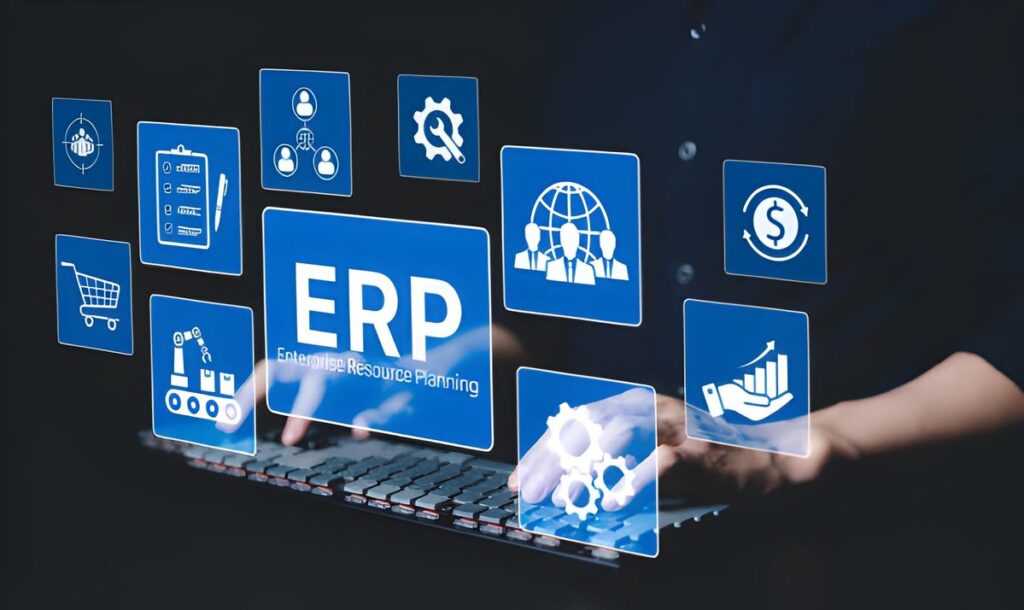
An ERP (Enterprise Resource Planning) Solution integrates all business operations into one centralized platform, allowing organizations to automate workflows, improve collaboration, and make informed decisions using real-time data.
Whether you’re a startup, SME, manufacturing company, retailer, healthcare provider, educational institution, or enterprise, an ERP solution can significantly improve operational efficiency and business growth. Modern ERP platforms unify finance, HR, inventory, CRM, purchasing, production, and reporting into a single system, enabling faster decision-making and better resource utilization.
What is an ERP Solution?
An ERP Solution is integrated business management software that connects every department within an organization.
Instead of using multiple independent applications, ERP combines everything into one centralized database.
This enables businesses to:
Manage finances
Track inventory
Automate HR
Monitor sales
Handle customer relationships
Manage procurement
All departments work with the same real-time information.
Why Businesses Need ERP Solutions
Without ERP systems, businesses often experience:
- Duplicate data entry
- Inventory inaccuracies
- Delayed reports
- Poor communication
- Manual paperwork
- Slow approvals
- Higher operational costs
- Limited business visibility
ERP eliminates these issues through automation and centralized management.
Key Features of an ERP Solution
1. Financial Management
Manage complete accounting operations including:
- General Ledger
- Accounts Payable
- Accounts Receivable
- Budget Planning
- Tax Management
- Financial Statements
- Profit & Loss Reports
2. Inventory Management
Track inventory in real time.
Features include:
- Stock Monitoring
- Barcode Management
- Warehouse Tracking
- Batch Management
- Purchase Orders
- Vendor Management
- Low Stock Alerts
3. Human Resource Management (HRMS)
Automate employee management including:
- Employee Database
- Attendance
- Leave Management
- Payroll
- Recruitment
- Performance Reviews
- Employee Self-Service
4. Customer Relationship Management (CRM)
Improve customer engagement through:
- Lead Management
- Sales Pipeline
- Customer Database
- Quotation Management
- Sales Forecasting
- Customer Support
5. Procurement Management
Manage purchasing activities such as:
- Vendor Selection
- Purchase Requests
- Purchase Orders
- Invoice Verification
- Supplier Performance
6. Manufacturing Management
Ideal for manufacturing companies.
Modules include:
- Production Planning
- Bill of Materials (BOM)
- Work Orders
- Quality Control
- Machine Scheduling
- Production Tracking
7. Sales Management
Monitor your sales cycle with:
- Quotations
- Sales Orders
- Invoice Generation
- Delivery Tracking
- Customer Payments
8. Reporting & Business Intelligence
Generate reports instantly.
Examples include:
- Sales Reports
- Financial Reports
- Inventory Reports
- HR Reports
- Customer Analytics
- KPI Dashboards
Real-time dashboards and analytics help managers make data-driven decisions.
Benefits of ERP Solutions
Increased Productivity
Automates repetitive business tasks.
Better Decision Making
Real-time dashboards provide accurate insights.
Reduced Costs
Minimizes manual work and operational expenses.
Improved Customer Service
Faster order processing and customer support.
Better Collaboration
Departments share one centralized database.
Data Security
Role-based access protects sensitive information.
Scalability
Supports business expansion without replacing systems.
Regulatory Compliance
Helps maintain accurate financial records and reporting.
Industries That Use ERP Solutions
ERP software is useful across multiple industries.
Manufacturing
- Production Planning
- Inventory
- Quality Control
Retail & E-commerce
- Order Management
- POS Integration
- Stock Tracking
Healthcare
- Patient Management
- Billing
- Inventory
Education
- Student Records
- Fee Management
- Attendance
Construction
- Project Management
- Resource Allocation
- Budget Control
Real Estate
- Property Management
- CRM
- Accounting
Logistics
- Fleet Management
- Shipment Tracking
- Warehouse Management
Hospitality
- Booking
- Billing
- Staff Management
Cloud ERP vs On-Premise ERP
Cloud ERP
Advantages:
- Lower initial cost
- Remote access
- Automatic updates
- High scalability
- Quick deployment
Best for:
- Startups
- SMEs
- Remote teams
On-Premise ERP
Advantages:
- Full control
- Custom security
- Internal hosting
Best for:
- Large enterprises
- Organizations with strict compliance requirements
ERP Implementation Process
Successful ERP implementation typically follows these stages:
Business Analysis
Understand workflows and requirements.
Planning
Create implementation strategy.
ERP Development
Customize modules according to business needs.
Data Migration
Transfer data from legacy systems.
Testing
Verify all business processes.
Employee Training
Train users across departments.
Go Live
Deploy ERP in the production environment.
Support & Maintenance
Provide updates, monitoring, and technical support after launch.
Why Choose Custom ERP Development?
Every business has unique workflows.
Custom ERP offers:
- Industry-specific modules
- Better performance
- Higher flexibility
- Easier integrations
- Greater scalability
- Enhanced security
- Long-term cost savings
Why Choose Business Growth for ERP Solutions?
Business Growth delivers modern ERP solutions designed to improve operational efficiency and support digital transformation.
Our ERP services include:
- Custom ERP Development
- Cloud ERP Solutions
- ERP Integration
- CRM Integration
- HRMS Development
- Inventory Management
- Financial Management
- Mobile ERP Applications
- ERP Support & Maintenance
- Business Process Automation
We build secure, scalable, and user-friendly ERP systems tailored to your business needs, helping organizations automate operations, improve collaboration, and accelerate growth.
Conclusion
An ERP Solution is no longer optional for businesses aiming to stay competitive. By integrating finance, HR, inventory, CRM, manufacturing, procurement, and analytics into one platform, ERP helps organizations improve efficiency, reduce costs, and make smarter decisions.
Whether you’re a startup or a large enterprise, investing in a customized ERP solution can streamline operations, enhance customer satisfaction, and create a strong foundation for long-term business success.