
The Role of AI in Modern E-commerce: Personalization and Automation
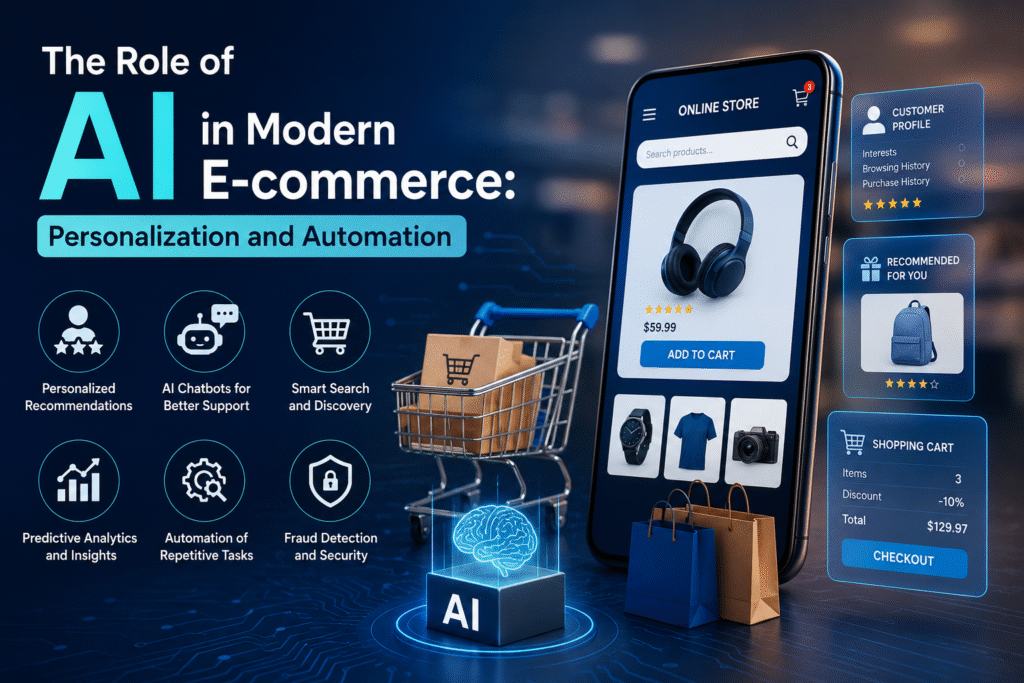
Artificial Intelligence (AI) is rapidly transforming the e-commerce industry. As online shopping continues to grow, businesses are looking for smarter ways to understand customers, improve shopping experiences, and streamline daily operations. AI-powered e-commerce solutions are helping businesses achieve these goals through advanced personalization, automation, data analysis, and intelligent customer support.
From personalized product recommendations to AI-powered chatbots, modern e-commerce businesses are using artificial intelligence to create faster, smarter, and more customer-focused shopping experiences. Let’s explore how AI is shaping the future of e-commerce.
1. AI-Powered Personalization
One of the biggest advantages of AI in e-commerce is the ability to deliver personalized shopping experiences. Every customer has different preferences, interests, and purchasing habits. AI can analyze customer behavior and use these insights to provide more relevant product recommendations.
For example, AI systems can analyze:
- Previous purchases
- Browsing history
- Search behavior
- Products added to the cart
- Customer preferences
- Purchase frequency
Based on this information, e-commerce platforms can recommend products that are more likely to interest individual shoppers. This personalized approach can improve customer engagement and encourage additional purchases.
2. Intelligent Product Recommendations
Product recommendations have become an important part of modern online shopping. AI algorithms can identify patterns in customer behavior and suggest products based on individual interests.
For example, when a customer purchases a laptop, an AI-powered system may recommend a laptop bag, wireless mouse, or keyboard. These recommendations can help customers discover relevant products while also creating opportunities for businesses to increase their average order value.
3. AI Chatbots for Customer Support
Customer support is another area where AI is making a significant impact. AI-powered chatbots can provide instant responses to common customer questions at any time of the day.
Chatbots can assist customers with:
- Product information
- Order tracking
- Shipping details
- Return policies
- Payment-related questions
- Frequently asked questions
By automating routine conversations, businesses can provide faster support while allowing human customer service teams to focus on more complex issues.
4. Automation of Repetitive E-commerce Tasks
Running an online store involves many repetitive tasks. AI and automation can help businesses reduce manual work and improve operational efficiency.
Businesses can automate activities such as:
- Order processing
- Inventory alerts
- Customer notifications
- Email campaigns
- Abandoned cart reminders
- Product recommendations
- Customer segmentation
This allows teams to save time and focus on important activities such as business strategy, product development, and customer relationships.
5. AI for Inventory and Demand Forecasting
Managing inventory can be challenging for e-commerce businesses. Overstocking can increase storage costs, while understocking can result in missed sales opportunities.
AI can analyze historical sales data, customer demand, seasonal trends, and market behavior to help businesses forecast future demand. These insights can support better inventory planning and help businesses maintain the right stock levels.
6. Smarter Pricing Strategies
AI can also help businesses make more informed pricing decisions. Intelligent systems can analyze market trends, customer demand, competitor pricing, and purchasing patterns.
Based on these insights, businesses can develop dynamic pricing strategies that respond to changing market conditions. This can help companies remain competitive while optimizing revenue opportunities.
7. AI-Powered Search and Visual Shopping
Traditional keyword-based searches may not always provide customers with the products they are looking for. AI-powered search technology can understand customer intent and deliver more relevant results.
Visual search is another emerging application of AI. Customers can upload an image of a product they like, and AI technology can identify similar products available in an online store.
These features make product discovery easier and create a more convenient shopping experience.
8. Personalized Marketing Campaigns
AI can help e-commerce businesses make their marketing campaigns more targeted and effective. Instead of sending the same message to every customer, AI can help businesses segment audiences based on behavior and preferences.
For example, businesses can create different campaigns for:
- New customers
- Repeat buyers
- Inactive customers
- High-value customers
- Customers who abandoned their carts
This level of personalization can make marketing communication more relevant and improve customer engagement.
9. Fraud Detection and Payment Security
Security is a major concern in e-commerce. AI can help businesses identify unusual transactions and detect potentially fraudulent activities.
AI-powered systems can analyze transaction patterns and identify suspicious behavior in real time. This can help businesses protect customers, reduce financial risks, and create a safer online shopping environment.
10. Improving Customer Experience
The ultimate goal of AI in e-commerce is to improve the customer experience. When customers receive relevant recommendations, quick support, personalized offers, and a smooth purchasing process, they are more likely to have a positive experience with a brand.
AI enables businesses to understand customer needs more effectively and deliver experiences that are faster, more convenient, and more personalized.
Benefits of AI in E-commerce
Implementing AI-powered solutions can provide several benefits, including:
- Improved customer personalization
- Increased operational efficiency
- Faster customer support
- Better product recommendations
- Reduced manual workload
- Improved inventory management
- Enhanced marketing performance
- Better fraud detection
- Higher customer engagement
- Opportunities for increased sales
The Future of AI in E-commerce
AI is expected to become an even more important part of the e-commerce industry. As technology continues to advance, businesses may increasingly use AI-powered virtual shopping assistants, predictive analytics, voice commerce, intelligent search, and hyper-personalized customer experiences.
However, businesses should also focus on responsible AI implementation. Customer data should be handled securely, and businesses should maintain transparency when using AI technologies. The goal should be to use AI to enhance the customer experience while maintaining trust and privacy.
Conclusion
Artificial Intelligence is changing the way e-commerce businesses operate and interact with customers. Through personalization and automation, AI enables businesses to create smarter shopping experiences, improve operational efficiency, and make data-driven decisions.
From intelligent product recommendations and AI chatbots to automated marketing and demand forecasting, AI-powered e-commerce solutions offer businesses new opportunities for growth. Companies that adopt AI strategically and responsibly can create more engaging customer experiences while building a more efficient and scalable online business.